
In the Dutch housing market, the thermal shell of a building determines both the comfort of living and the market value of the property. The walls form the largest surface through which heat transfer takes place, making wall insulation one of the most profitable investments for sustainability. At Bricknest, we do not approach this process as a single intervention, but as a building physical improvement that requires precision and in-depth knowledge of materials.
A successful project starts with integral planning. Your personal project manager at Bricknest coordinates the entire process, while you have real-time insight into technical progress and quality controls via our digital client portal. We offer you the security of our Bricknest Double Guarantee: 1 year full warranty on execution and comprehensive project insurance up to €500,000. For a complete picture of the insulation options in your home, you can also use our floor insulation guide consult to read how different layers interact.
Why wall insulation is necessary
Insulating the walls is crucial to restore the energy balance in your home. Uninsulated facades allow the cold to penetrate deep into the structure in the winter, while they retain the heat for a long time in the summer. By creating an effective thermal barrier, you stabilize the indoor climate and significantly reduce the load on your heating system.
Reduction of heat loss
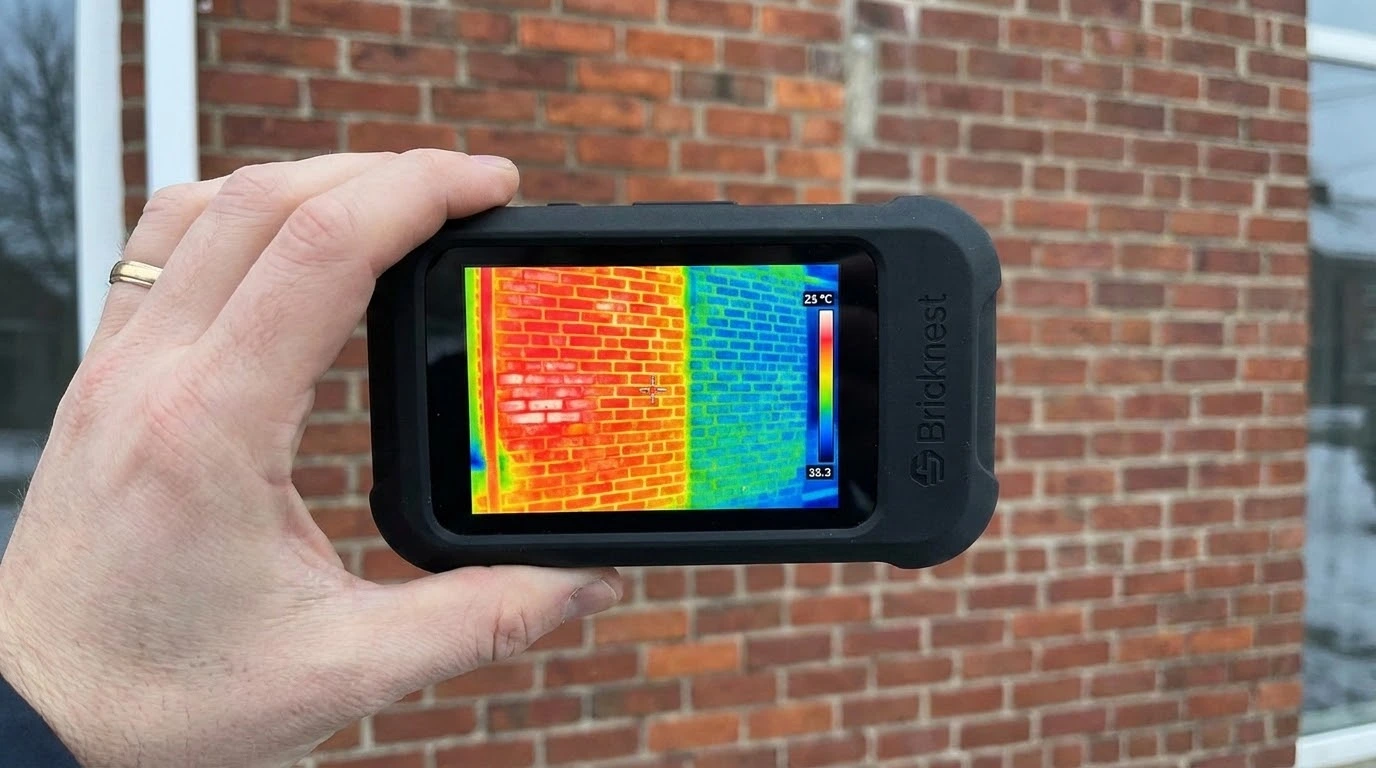
Walls account for an average of 20% to 25% of the total heat loss in a home. When we insulate the walls, we increase the Rd (thermal resistance) value of the façade, so that the heat stays where it belongs. This is particularly essential in the Amsterdam region, where the wind load on the facades accelerates cooling.
Moisture protection
Professional insulation protects the home against excessive moisture and condensation problems. By technically correctly positioning the dew point, we prevent water vapor from condensing against the inside of the structure. This is a fundamental aspect in maintaining the architectural integrity of your building.
More comfort at home
An insulated wall no longer radiates cold, so the perceived temperature in the house rises without having to turn up the thermostat. In addition, the general living environment is improving because draught flows along cold walls are eliminated.
The benefits of a complete façade approach by Bricknest include:
- Significant reduction in monthly energy costs;
- Increasing the market value and improving the energy label of the property;
- Improving the acoustic climate through sound absorption;
- Protection of the structure against extreme temperature changes;
- A healthier indoor climate without the risk of mold.
By combining these benefits, we create a home that is ready for the future and meets the most stringent environmental standards.
Isolation of cavity walls
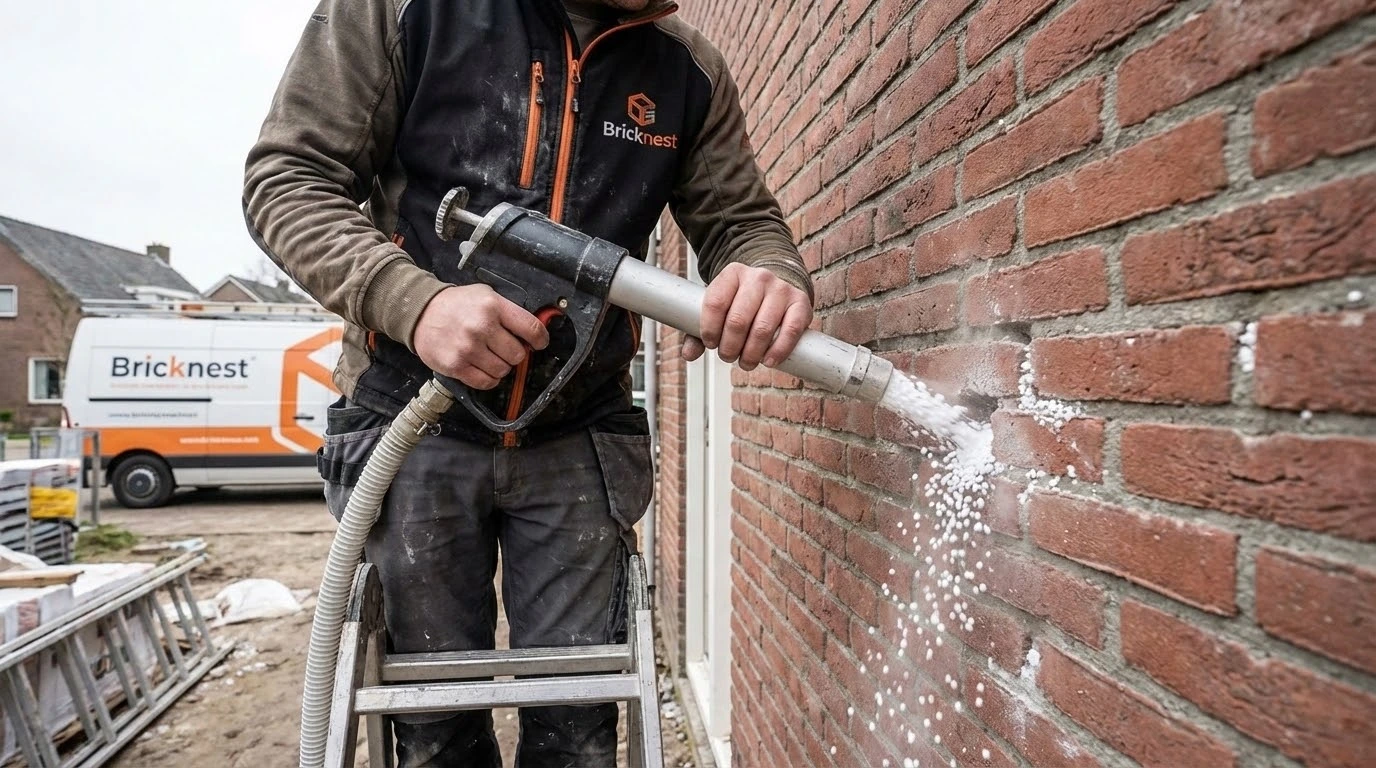
Cavity wall insulation is the most used method in the Netherlands for homes built between 1920 and 1980. In this technique, we fill the empty space between the inner and outer walls with insulation material. In our comprehensive cavity wall and facade insulation guide you can read more about the various options and detailed cost estimates.
What does cavity wall insulation cost
The question of what does cavity wall insulation cost depends strongly on the cavity width, accessibility and the chosen material, such as EPS pearls or mineral wool. On average, this investment pays off within 3 to 5 years through direct savings on gas or electricity. An exact calculation for your specific home will be included by Bricknest in your personal quote in the portal.
Cavity wall after insulation
A cavity wall behaves physically differently after insulation. The inner wall stays warmer, which prevents condensation, but the outer wall dries less quickly due to the absence of air circulation. That is why Bricknest always performs an endoscopic examination to ensure that the cavity is clean and that there are no cement beards that can form cold bridges after filling.
Cavity wall insulation, moisture problems
Cavity wall insulation moisture problems usually do not arise from the principle of cavity insulation itself, but due to an inappropriate façade or an incorrect choice of materials. In particular, heavy rainfall, contaminated cavities or damaged facades increase the risk.
The technical assessment should focus on:
- the condition of the jointing and the facing brick;
- the width and purity of the cavity;
- existing traces of moisture or penetration;
- suitability of the insulation material.
Without this control, a seemingly simple measure can later lead to moisture complaints on the inside.
Interior wall insulation
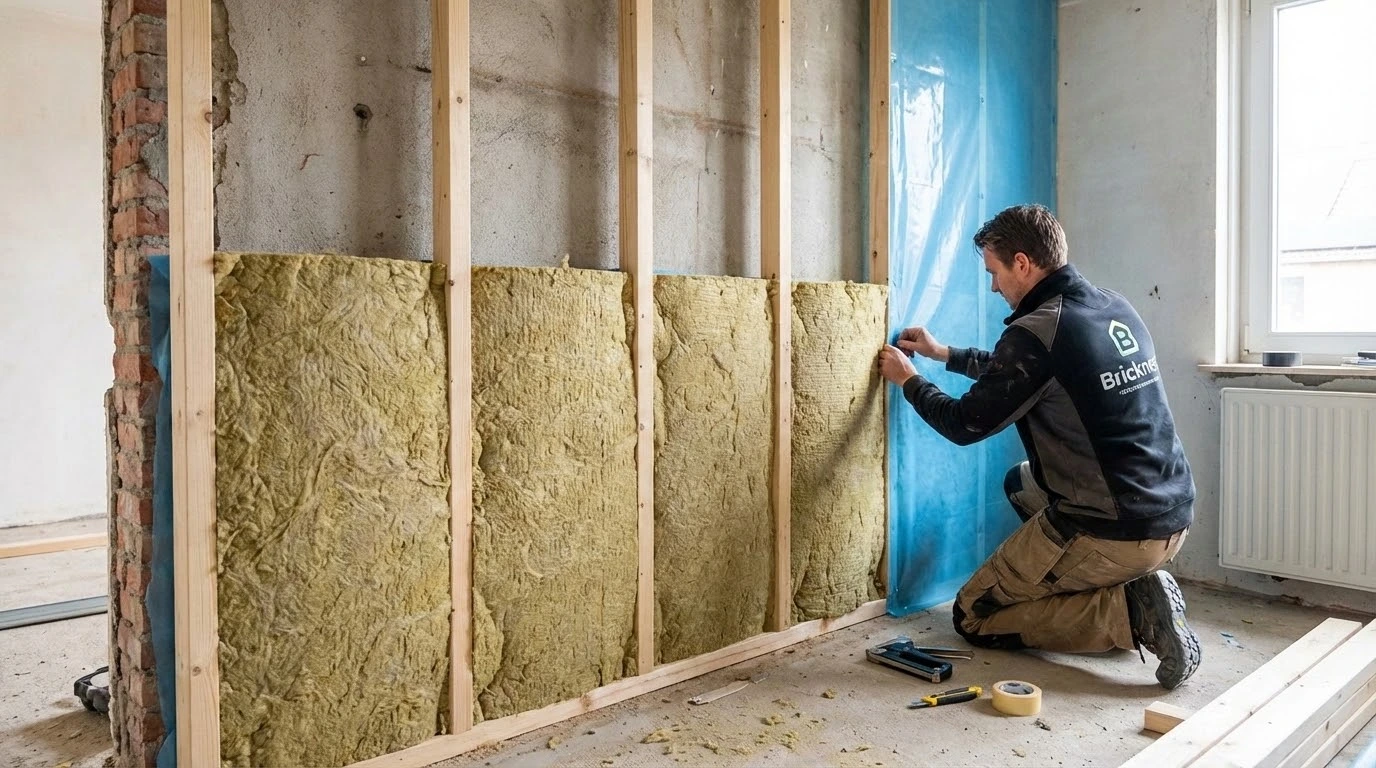
If there is no cavity or the outer façade cannot be changed, for example in the case of monumental buildings, interior insulation is the only option. This requires an extremely careful technical approach to controlling the moisture balance. It is helpful to also read the article about thermal vs acoustic insulation to read to understand how interior materials can perform both functions.
Interior wall insulation
The installation of interior wall insulation is usually done with front walls or directly glued panels. The biggest challenge is airtightness: any leak in the vapor barrier can lead to condensation behind the insulation, which damages the structure. Bricknest uses intelligent climate foils that open or close their pores based on humidity.
Lambda value isolation
The lambda insulation value (λ) is the most important indicator of the effectiveness of a material. The lower the lambda value, the less heat the material lets through. When it comes to interior insulation, we aim for materials with an extremely low λ value in order to achieve a maximum RD value with minimal thickness, so that you lose as little living space as possible.
Thin insulation plates
In urban environments like Amsterdam, every inch counts. That is why we often recommend thin insulation plates made of PIR or RESOL-hard foam. These materials offer superior thermal performance at a thickness of just a few centimetres, which is essential to maintain the usability of the rooms while drastically improving energy performance.
How to choose the right insulation solution
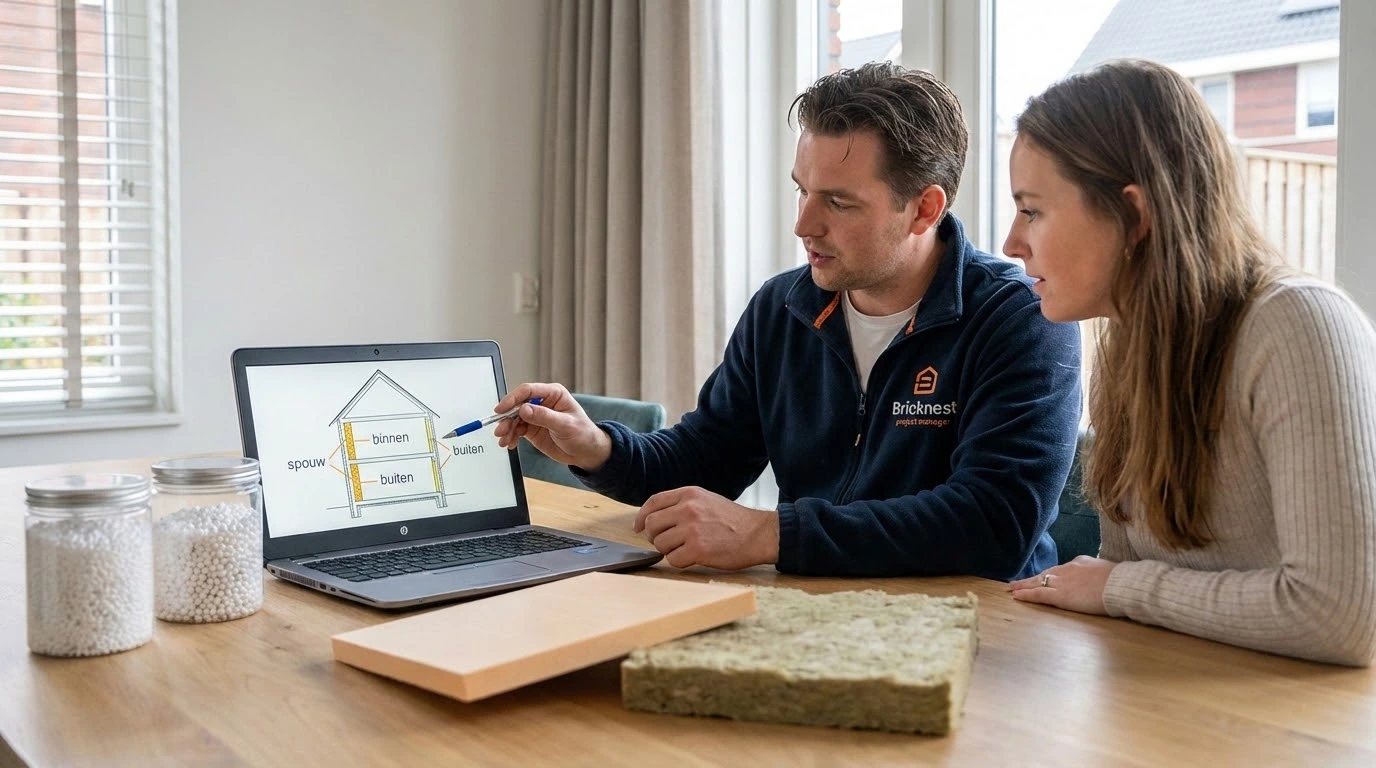
Choosing the right insulation system is a technical process where we take into account the age of the home, the condition of the masonry and your budgetary frameworks. Bricknest helps you make an informed decision that offers the best balance between investment and return.
To make the right decision, our project managers use the following control points:
- Presence and breadth of the cavity via endoscopic examination;
- Quality and frost resistance of the outdoor stones;
- Available space on the inside for front walls;
- Existing ventilation facilities in the home.
Once these factors have been identified, we will draw up an integrated plan. For homes where the top shell also needs to be addressed, we recommend our roof insulation guide to read to understand how roof and wall insulation technically connect.
Based on wall type
Solid walls require exterior wall insulation or interior insulation, while cavity walls can often be tackled from the inside more quickly and cheaply. The technical condition of the joints is therefore decisive for the feasibility of the procedure.
Based on the budget
Cavity wall insulation is the most cost-effective option. Indoor or outdoor insulation requires a larger investment but often offers a higher thermal profit. Via your Bricknest dashboard, you can compare different scenarios to see which option provides the highest return within your budget.
With a view to possible moisture load
In any form of insulation, ventilation is essential. We calculate the vapour flow through the wall to ensure that moisture does not remain in the structure. This always looks at the interaction with windows and ventilation grilles.
With Bricknest's expertise, you are assured of technically flawless wall insulation, supported by digital transparency and the best guarantees in the industry.
Are you ready to make your home more comfortable and economical? Contact Bricknest and start your project with the guidance of a personal project manager.

