
If you have been following the news about Dutch energy regulations lately, you likely feel a bit overwhelmed. One day there is talk of mandatory heat pumps, and the next, a new cabinet seems to walk those plans back. It is a confusing time for anyone trying to plan a renovation or replace an aging boiler. As we move through 2026, it is vital to separate the political headlines from the actual laws currently on the books. While some of the more aggressive “mandates” have changed, the shift toward sustainable heating is still moving forward through building codes and European standards that affect the long-term value of your property.
Legal Framework and the Status of Heat Pump “Obligations”
Understanding your legal position in 2026 requires looking at three different regulatory tracks simultaneously. First, there is the national policy set by the current Schoof cabinet, expressed in the Regeerprogramma, which sets the political direction of the energy transition and determines how subsidies are shaped, but does not automatically create binding obligations for individual homeowners.
Second, we have the Besluit bouwwerken leefomgeving (Bbl), which contains the hard technical rules for construction and renovation and applies in specific situations, particularly when major building work is carried out. Finally, European regulations — most notably the revised F-gases Regulation and the Energy Performance of Buildings Directive (EPBD IV) — set overarching standards for emissions, refrigerants, and building performance that the Netherlands is legally bound to follow. These three layers together define what is legally required, what is technically expected, and what is strategically encouraged.
Existing Homes (Owner-Occupied Housing)
The most significant update for 2026 is the official reversal of the previously discussed national idea of a mandatory hybrid heat pump for individual boiler replacements. If your central heating boiler fails today, you are not legally forced at national level to install a hybrid system. However, there is a nuance that often confuses homeowners: the distinction between a simple appliance swap and a full heating system replacement. Replacing only a boiler is not treated the same as completely overhauling the heat source, distribution network, and emitters. In the latter scenario, different building regulations under the Bbl may come into play, but this remains legally distinct from a routine boiler replacement. This difference between a partial upgrade and a full system renewal is key to understanding your obligations in practice.
New-Build Homes
For anyone moving into a newly constructed property, the transition away from gas is already the settled standard. Gas connections for new residential buildings are effectively a thing of the past in 2026. Under the BENG requirements, new properties must achieve such high levels of energy efficiency that a traditional gas boiler is no longer a viable technical option. This has made fully electric heat pumps or connections to local district heating networks the standard operating procedure for developers. When you buy a new build today, the legal and technical framework has already steered your home toward a gas-free future, not through a single “heat pump mandate,” but through stringent energy performance standards.
Non-Residential Buildings (Utiliteitsbouw)
The commercial and public sectors are currently facing their own set of tightening regulations driven by the European EPBD IV directive. These rules require large office buildings and public facilities to accelerate their decarbonisation efforts, often influencing heating choices during major renovation cycles. The focus is on reducing operational emissions as quickly as possible, which is pushing the professional real estate market toward high-capacity heat pumps, hybrid configurations, and thermal storage solutions. This ensures that the buildings where we work and shop are moving in the same sustainability direction as residential neighbourhoods, even if the exact technical path differs.
Important Dates and Deadlines for Implementation
Timing is everything when it comes to home improvement, especially when shifting policies are involved. It is important to realise that the calendar looks quite different depending on whether you are looking at a brand-new architectural project or a renovation of a 1930s townhouse. While the building codes (Bbl) set the legal floor for technical standards, the deadlines for subsidies and environmental compliance operate on their own schedules, making it essential to see the transition as a multi-layered process rather than a single “switch-on” date.
Deadlines for New Construction
The requirements for new residential buildings are the most immediate and stringent. Since 1 January 2021, the criteria for obtaining building permits have been based on the BENG framework, which sets binding energy performance standards for all new construction and effectively rules out conventional gas boilers in most projects.
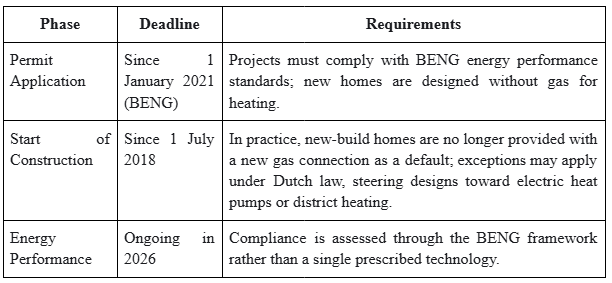
These milestones show that the decisive shift for new-build housing occurred not through a stand-alone “heat pump ban” but through stricter energy performance rules that effectively make gas-based heating impractical in most projects.
Transition Period for Existing Homes
For those living in existing properties, the transition is characterised more by “natural moments” than by hard, immediate deadlines. The government has moved away from the idea of a forced installation at a specific date, recognising that every house has its own technical rhythm. Instead, the focus is on moments when major changes to the heating system are already taking place. Subsidies introduced before 2026 continue to apply under their original conditions, while later adjustments to the ISDE scheme reflect both market developments and European environmental rules.
However, the law acknowledges that certain properties simply are not ready for this change just yet. The following exceptions are commonly recognised in practice and policy discussions:
- Technically unsuitable homes where the current level of insulation or space constraints make a heat pump inefficient.
- Properties planned for district heating within a timeframe of ten years, where a temporary gas solution is more practical.
- Monumental properties where the installation of an outdoor unit would violate historic preservation codes.
These exceptions provide a necessary safety net for homeowners who face unique structural or financial hurdles. Even if your home falls under one of these categories, the trend toward higher efficiency remains the ultimate goal, and many homeowners still choose to make incremental improvements to prepare for a smoother transition in the future.
Rules for New and Existing Homes
While the overarching goal of reducing carbon emissions is the same for all Dutch residences, the technical path to get there varies. New-build projects allow for a “blank slate” approach where systems can be optimised from the ground up, whereas existing homes require a more tailored strategy that balances modern technology with older infrastructure. Understanding these different rules helps in choosing the right equipment that not only satisfies the law but also provides the best return on investment.
Heat Pumps in New Construction
In new builds, the focus is on maximizing the Seasonal Coefficient of Performance (SCOP). These systems are designed to be the sole source of heat and hot water, often integrated with solar panels to achieve a near-zero energy balance.
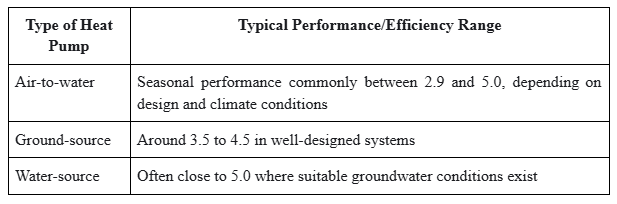
The high efficiency of these systems is closely linked to modern insulation standards and low-temperature heating, such as underfloor pipes. This combination ensures that the heat pump does not have to work as hard, resulting in lower electricity bills and a longer lifespan for the unit itself.
Hybrid Heat Pumps for Existing Homes
The landscape for existing homes has shifted from a “mandatory” mindset to a more pragmatic one. You may have heard that a hybrid heat pump would be mandatory from 2026, but this specific national mandate was ultimately cancelled by the cabinet. The current approach relies more on market incentives, energy prices, and subsidies rather than legal compulsion. A hybrid system — which pairs your existing or a new gas boiler with a smaller electric heat pump — remains the most practical choice for many homes that are not yet fully ready for an all-electric conversion.
Hybrid systems can significantly reduce natural gas consumption while still relying on a boiler during very cold periods. This makes them less disruptive for homes that are not yet fully insulated or equipped for low-temperature heating. The ISDE scheme provides financial support that often shortens the payback period, and for many households a hybrid heat pump represents a realistic first step toward deeper decarbonisation without the higher upfront costs of a full electric conversion.
Exceptions and Special Circumstances
The transition to sustainable heating is a significant undertaking, and the Dutch government acknowledges that every building presents unique challenges. Legislation and policy are designed with a degree of flexibility, ensuring that homeowners are not forced into technically impossible or financially ruinous situations. By providing specific legal and practical “exit ramps,” the state aims to keep the energy transition feasible for a diverse housing stock, from high-tech modern apartments to centuries-old canal houses.
Monumental Properties
Owning a piece of Dutch history comes with its own set of responsibilities and restrictions. For monumental properties, preserving the historical and aesthetic integrity of the building often takes precedence over standard energy efficiency measures. Installing a modern heat pump — which usually requires an outdoor unit and significant internal piping — can be problematic in these structures. Consequently, monumental buildings are often treated with greater flexibility, allowing owners to seek custom solutions that do not compromise the heritage status of their home.
Technically Unsuitable Homes
Not every house is physically ready for a heat pump. A system can only operate efficiently if the home is reasonably well insulated; otherwise, electricity costs could rise sharply while comfort remains inadequate. If a property has a low energy label and lacks space for a thermal buffer or the structural capacity for low-temperature heating, it may be considered technically challenging for a standard heat pump. In such cases, improving the thermal shell of the building often becomes the priority before any major switch in heating technology is expected.
Alternative Solutions
For properties that do not fit the heat pump model, other sustainable heating pathways remain available. Connection to a district heating network (Warmtenet) is common in high-density urban areas where collective systems are planned or already in place. Some homeowners may opt for a fully electric setup using alternative electric heating technologies, provided the home’s insulation supports it. The regulatory goal is not to enforce one specific technology but to ensure a meaningful reduction in fossil fuel reliance.
By maintaining these exceptions and alternatives, the legal framework remains grounded in reality. It ensures that while the country moves toward a greener future, individual property owners are given the time and space to find a solution that works for their specific architectural and financial context.
Costs, Subsidies, and Financial Support
Switching to a heat pump is an investment in the future, but the upfront costs can be substantial. To bridge this gap, the Netherlands has established a robust system of financial instruments, primarily through the ISDE programme. These incentives are not only designed to make the technology more affordable but also to steer the market toward higher-performing and more environmentally friendly units available in 2026.
Subsidies and Incentive Programs (ISDE 2026)
In 2026, the ISDE subsidy structure was adjusted to reflect both falling heat pump prices and evolving European environmental standards. Compared to 2025, the fixed start amount for the first air-to-water heat pump was reduced to €1,025, while the variable component of €225 per kilowatt now applies from the very first kilowatt. The €200 bonus for A+++ energy labels was retained, but for second and subsequent air-to-water heat pumps, only the per-kilowatt contribution remains available. These changes aim to align public spending more closely with actual market conditions while continuing to incentivise high-efficiency installations.
Installation Costs of Heat Pumps
The cost of transitioning to a heat pump depends heavily on the type of system chosen and the existing state of the home's heating infrastructure. While the price of the hardware itself has stabilised, professional installation by certified technicians remains a significant portion of the total investment.
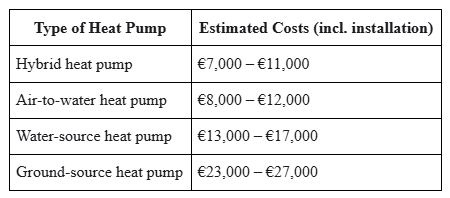
Actual costs vary depending on building size, insulation level, and site conditions, but these ranges provide a realistic benchmark for homeowners planning their investment. In many cases, subsidies and long-term energy savings significantly reduce the effective net cost of installation.
Financing Options for Homeowners
The National Heat Fund (Nationaal Warmtefonds) provides low-interest loans for sustainable heating upgrades. The available amount depends on the specific measures, household income, and chosen financing product. In practice, private homeowners can typically access funding from around €1,000 up to approximately €28,000 or more for comprehensive renovation packages, subject to eligibility and credit assessment.
- Installation must be carried out by a certified installer and meet relevant efficiency standards.
- The ISDE subsidy application must be submitted within 24 months of installation.
- A clear and detailed invoice is required as part of the application process.
By combining grants and affordable financing, the Dutch system seeks to remove financial barriers while ensuring that installations meet professional and regulatory standards.
Installation and Compliance Guidelines
The effectiveness of a heat pump is determined as much by the quality of the installation as by the machine itself. In 2026, the regulations surrounding the “who” and “how” of installation have reached a new level of professionalisation. This is not just to ensure energy efficiency but also to manage safety risks associated with modern refrigerants and to protect neighbourhoods from excessive noise.
Certification Requirements for Installers
Installers working with F-gases must hold both a personal certificate (BRL 200) and a company certificate (BRL 100), ensuring competence at both individual and organisational levels. Since 29 September 2025, certification requirements have also been extended to cover natural refrigerants such as propane (R290), carbon dioxide, and ammonia, reflecting their growing use in modern heat pump systems and the associated safety considerations.
Inspection and Maintenance Requirements
To remain compliant and ensure the longevity of the equipment, a structured maintenance schedule is a legal and practical necessity. Larger systems, in particular, fall under mandatory leak-check protocols to prevent environmental damage.
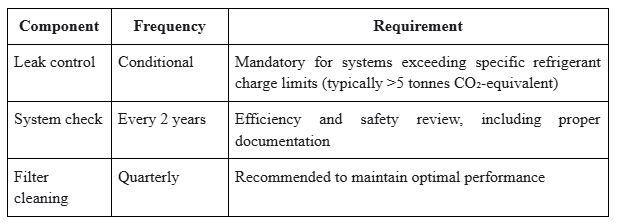
While many smaller residential units do not trigger an annual mandatory check, regular inspections are still recommended to maintain efficiency and warranty status.
Regular servicing ensures that the system remains as quiet and efficient as the day it was installed. Neglecting these checks can lead to increased electricity consumption and potential compliance issues.
Technical Standards for Heat Pumps
A major focus in the 2026 regulatory framework is the management of acoustic impact. In relevant cases, outdoor units are limited to a noise level of 40 dB at the property boundary, calculated in accordance with the methodology set out in the Omgevingsregeling (Article 5.59 and Annex XVII). Achieving this often requires careful placement and, in some situations, acoustic mitigation measures. Beyond acoustics, installations must be professionally designed and executed, with proper sizing, integration with the building’s insulation, and comprehensive documentation to demonstrate compliance with all applicable standards.
Project Management for Renovations
Transitioning to sustainable energy involves more than just selecting a device; it requires coordination across technical, legal, and financial domains. This is where professional project management becomes the bridge between a complex regulatory framework and a stress-free home upgrade. At Bricknest, the focus is on handling the intricate details of planning and compliance so homeowners can concentrate on the benefits rather than the bureaucracy.
Bricknest’s Approach
Bricknest’s philosophy is built on the idea that sustainability should be simple and reliable. Rather than merely supplying equipment, Bricknest provides a managed service that accounts for everything from initial noise calculations to final subsidy submissions. By centralising the management of your renovation, Bricknest reduces the friction usually associated with coordinating multiple contractors and interpreting building codes.
- Preparation: A comprehensive assessment of your home’s energy label, insulation status, and spatial constraints to determine the optimal system.
- Execution: Installation by certified BRL technicians who ensure that the unit is balanced, quiet, and fully integrated with your existing infrastructure.
- Aftercare: Managing the ISDE subsidy application process and setting up a digital maintenance plan to guarantee long-term performance.
This end-to-end oversight ensures that no detail is overlooked, from the precise placement of an outdoor unit to the technical documentation required for your energy label upgrade.
Insight into Costs and Planning
Financial clarity is the cornerstone of any successful renovation project. To remove the guesswork from your energy transition, Bricknest uses a digital platform that provides real-time insights into every aspect of your project. This tool serves as a central hub where you can track planning, technical specifications, and total costs with transparency.
Transparency and Digital Monitoring
In the fast-moving 2026 energy market, having a digital overview of your renovation project is invaluable. Bricknest’s platform allows you to visualise projected savings and payback periods based on current energy prices and subsidy levels. You can access compliance certificates, noise calculation reports, and warranty documents in one secure location, ensuring that you are always prepared for future inspections or property valuations.
Strict Quality Control and Support
A heat pump is a long-term investment, and its performance depends entirely on the precision of its installation. Inadequate quality control can lead to higher electricity bills, excessive noise, or even disputes with neighbours. Because of this, Bricknest implements a rigorous quality assurance protocol that goes beyond standard industry requirements to protect your investment and your comfort.
Bricknest’s Guarantees and Support
We believe that true support doesn't end when the installers leave your property. Our commitment to excellence is backed by a comprehensive service structure designed to provide immediate assistance whenever you need it. Every project is assigned a dedicated quality manager who verifies that the final installation meets the strict 40 dB noise limits and high-efficiency benchmarks required by law.
- 1-year comprehensive workmanship warranty on all installation services.
- Professional insurance coverage that protects your property throughout the renovation.
- Periodic safety inspections to ensure F-gas compliance and system longevity.
- Direct technical support for troubleshooting and system optimization.
This layer of protection ensures that your transition to sustainable heating is not just a one-time upgrade but a permanent enhancement to your home’s value and comfort. With Bricknest, you are never alone in managing your energy future.
Conclusion and Next Steps
The rules for heat pumps in 2026 are ultimately about progress, even if the legal path has seen some shifts. While the previously discussed “hard” mandate for hybrids has been replaced by a more flexible approach, the underlying trend toward decarbonisation remains stronger than ever. Choosing to upgrade now is about taking control of your energy bills and future-proofing your home against a volatile gas market.
Preparing for the Change
Getting started on your energy transition does not have to be daunting. Breaking the process down into manageable steps makes it easier to make informed decisions for your specific home and financial situation. It is always better to plan ahead rather than being forced into a rushed decision when an old boiler finally breaks down.
- Check whether your chosen heat pump model meets the efficiency criteria recognised under the ISDE scheme.
- Ensure that your subsidy application is submitted within 24 months of installation.
- Gather all relevant documentation, including invoices from certified installers.
With the right preparation, homeowners can transition to a more sustainable heating system while making the most of available financial and technical support.
Why Seek Professional Help?
The intersection of the Building Decree (Bbl), European F-gas rules, and complex subsidy systems creates a landscape that is difficult to navigate alone. Professional guidance is not just a luxury; it is a safeguard against technical errors and lost financial opportunities. An expert partner ensures that every bolt, wire, and calculation meets the latest 2026 standards, giving you total peace of mind.
FAQs
To help you cut through the confusion of the latest policy changes, the following answers reflect the legal and policy situation as of February 2026 and clarify frequent misunderstandings.
Is a heat pump mandatory from 2026?
No. As of February 2026, there is no general national legal obligation requiring homeowners to install a hybrid heat pump when replacing only their central heating boiler. Earlier policy proposals were revised in the Regeerprogramma, meaning the decision largely remains with homeowners, subject to building regulations that may apply in specific circumstances such as a full heating system replacement.
When do the new rules exactly come into effect?
For new-build homes, stricter energy performance requirements based on the BENG framework have applied since 1 January 2021, effectively steering projects toward electric heat pumps or district heating”. For existing homes, there is no single nationwide “start date” for mandatory heat pump installation when replacing a boiler; relevant rules depend on the nature of the renovation, applicable building regulations, and subsidy timelines under the ISDE scheme.
What are the technical requirements?
Heat pumps must comply with applicable building and environmental standards, including energy performance criteria under the BENG framework and noise limits for outdoor units where relevant. Installations must be carried out by certified professionals, meet efficiency benchmarks recognised under the ISDE scheme, and adhere to European and national rules on refrigerants, including the updated F-gases Regulation.
Will I still get a subsidy if I install it myself?
No. One of the strictest rules of the ISDE programme is that the installation must be performed by a professional installation company. DIY projects are not eligible for financial support and often fail to meet the documentation requirements needed for updated energy labels and compliance checks.

