
In the modern Dutch kitchen, the exhaust system is no longer just a functional part, but an integral part of interior design and air quality. At Bricknest, we see that a thoughtful choice for ventilation directly contributes to the longevity of your home and daily living comfort. Whether you're renovating a historic building in Amsterdam or starting a new construction project, the technical details of your extractor determine whether your kitchen stays fresh and grease-free.
A successful renovation starts with good preparation. It is therefore essential to have a clear checklist for a modern kitchen renovation to handle, where ventilation is a top priority. Thanks to your personal project manager at Bricknest and our digital client portal, you maintain complete transparency and control over technical implementation and quality assurance during this process.
Why an extractor is needed
The need for a high-quality extractor goes beyond simply expelling cooking odors. During cooking, gases, particulate matter and moisture are released that, without adequate drainage, can affect the physical condition of your home.
Elimination of odours and grease
During baking and roasting, microscopic fat particles spread through the space. Without a powerful extraction system, these particles settle on your cupboards, walls and even your living room furniture. A professionally installed system captures these particles at the source, keeping your kitchen hygienic and reducing the time you spend on intensive cleaning activities.
Improving air quality
Gas cooking releases nitrogen dioxide, but induction cooking also produces cooking fumes that drastically increase the humidity in the home. A good extractor fan refreshes the air in the kitchen an average of ten times per hour. This is crucial for a healthy living environment and prevents health problems related to poor indoor air quality.
Protection of furniture and walls
Moisture is the number one enemy of kitchen cabinets and stucco. Hot steam that condenses against cold surfaces can lead to the expansion of wood panels and the development of mold. An effective extractor removes this moisture immediately, protecting the investment in your kitchen furniture in the long term.
Types of kitchen range hoods
The architecture of your home largely determines which ventilation system is technically feasible. For an in-depth look at all available models, please visit our kitchen extractor guide consult, in which we extensively compare different systems.
Cooker hood
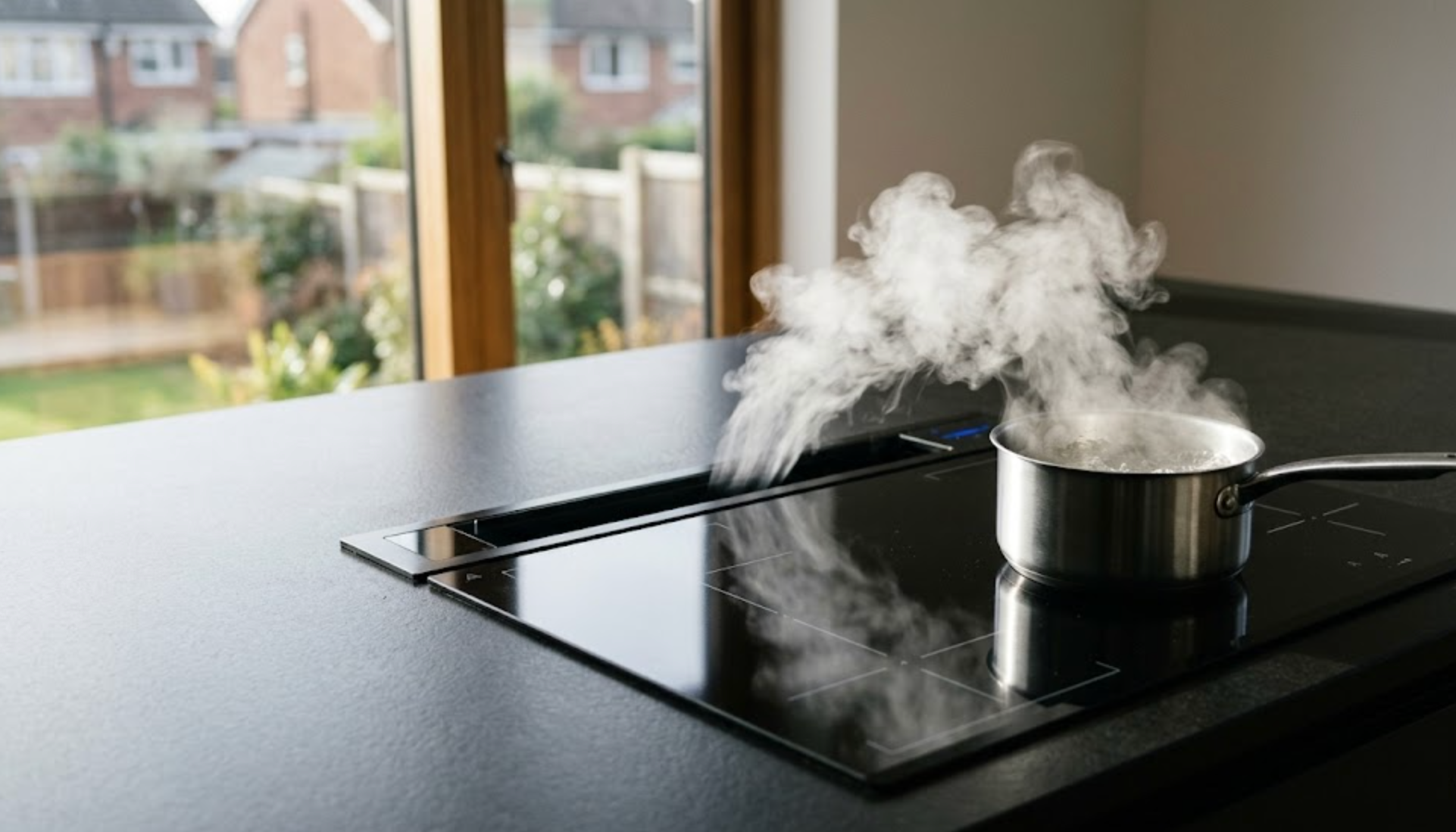
The cooker hood, also known as downdraft ventilation, is one of the most prominent trends in recent years. Here, the cooking vapors are drawn down immediately before they have the chance to rise. This system is technically very advanced and ideal for kitchen islands, because there is no annoying cover in sight. However, it requires accurate installation of the exhaust channels under the kitchen floor or behind the cabinets.
Motorless extractor
In many modern apartment complexes with a central ventilation system, a motorless extractor is the standard. These covers themselves do not have a mechanical drive, but use the suction power of the building's central unit. The technical challenge here is the precise adjustment of the electric valve so that the exhaust system functions optimally without disturbing the ventilation balance of the neighbours.
Recirculation extractor
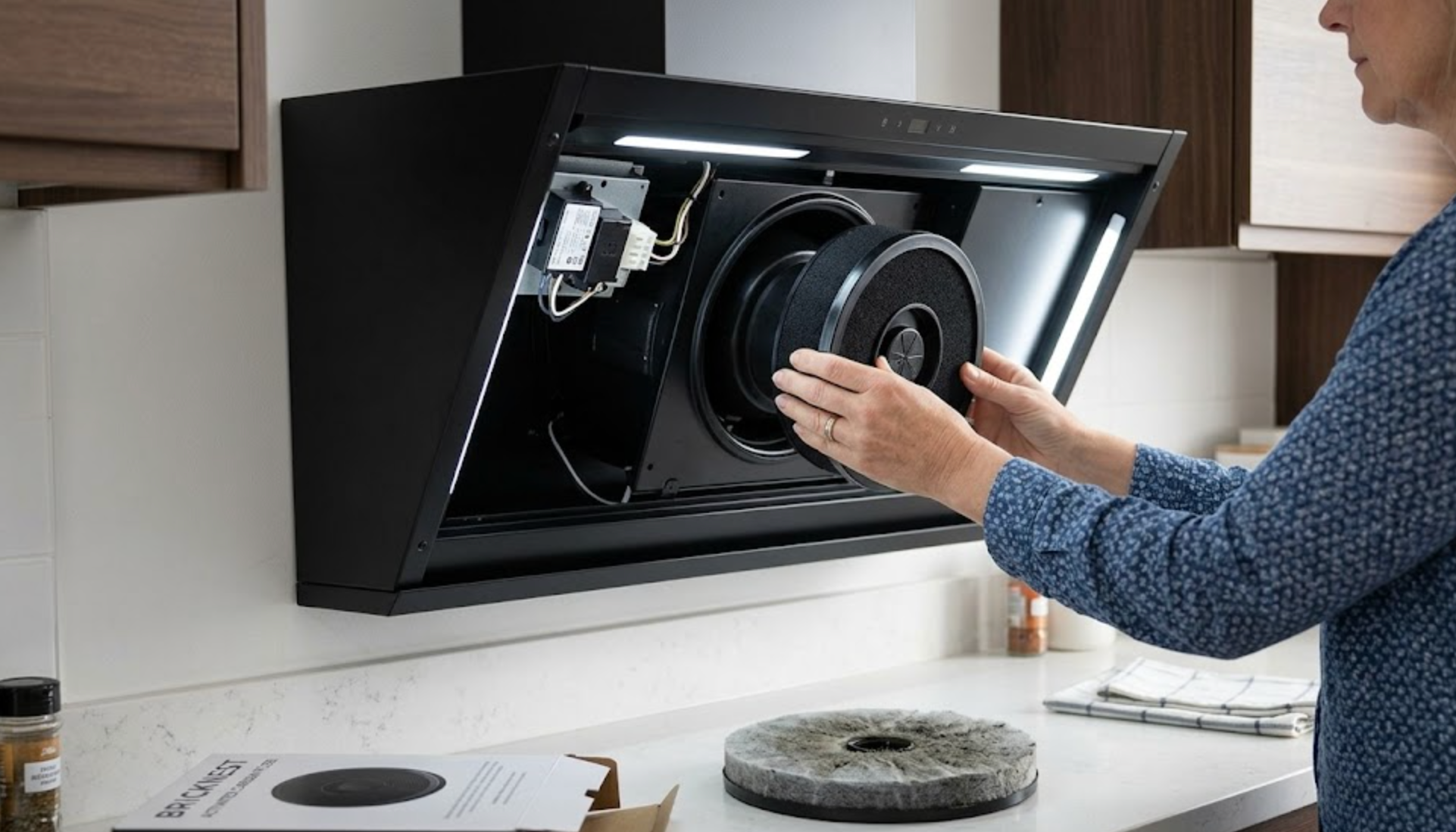
In energy-efficient homes where no exhaust channel is allowed or cannot be built outside, a recirculation extractor offers a solution. Instead of blowing the air out, the air is passed through an advanced filter system and blown cleanly back into the room. This saves heat in the winter, but places high demands on the quality of the carbon filters to effectively neutralize odors.
Construction and basic elements
To make the right choice, it is important to understand what is going on under the hood housing. This is because the quality of the internal components determines the efficiency and noise level of the device.
Extractor filter
An extractor filter captures grease particles and, when recirculated, also part of the odours. Metal filters are intended for grease capture and can usually be cleaned. Carbon filters neutralize odours but have a limited lifespan. In a recirculation system, the quality of this filter stage determines the final result.
Important points of attention are:
- filter type and compatibility with the device;
- accessibility for cleaning or replacement;
- the difference between grease filter and carbon filter.
A good extractor only performs stably when the filters remain clean and are positioned correctly.
Extractor motor
The power of the extractor motor is expressed in cubic meters per hour (m³/h). At Bricknest, we calculate the required capacity based on the volume of your kitchen. A powerful motor doesn't have to run as fast to achieve the same result, resulting in a significantly lower noise level when cooking. Modern brushless motors are the quietest and most energy-efficient option here.
Extractor installation
A technically perfect installation is essential to get the most out of your extractor. Improper installation often leads to unnecessary noise and reduced extraction capacity.
Extractor height
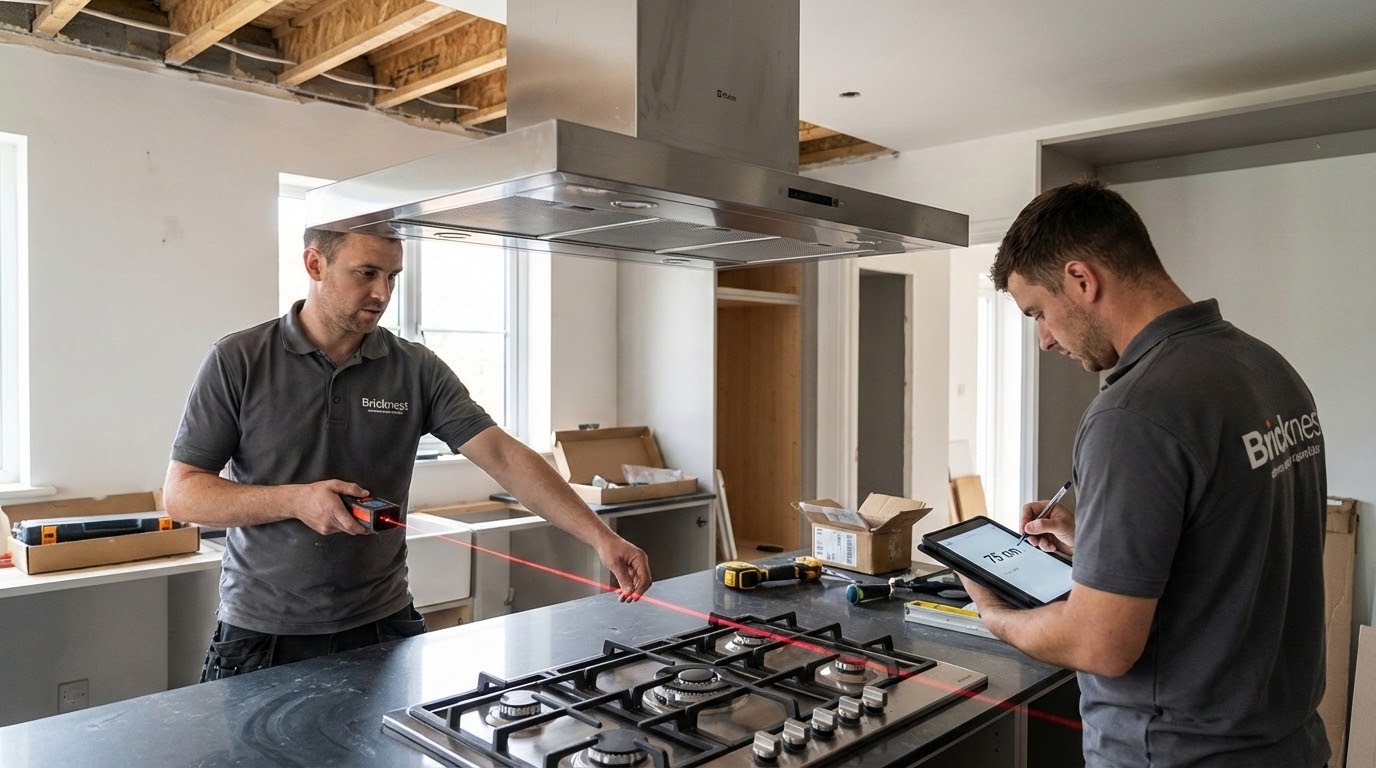
The extractor height is one of the most critical factors for both safety and operation. If the hood hangs too low, there is a risk of fire; if it is too high, the cooking fumes will disappear in the room before they reach the hood. For induction cookers, we usually recommend a distance of 65 centimetres, while gas hobs require a minimum height of 75 centimetres to withstand the heat of the flames.
Assembly recommendations
During assembly by Bricknest's professionals, we pay attention to the smallest details to guarantee optimal results. A properly installed system takes into account the following technical aspects:
- Using smooth, rigid exhaust pipes instead of flexible hoses to minimize drag.
- The diameter of the discharge pipe must exactly match the output of the engine (usually 150 mm).
- Limiting the number of bends in the channel; each 90-degree turn reduces capacity by an average of 10%.
- An airtight connection to the outer wall with a high-quality wall grille that prevents the return of cold air.
After installation, we check the airtightness and flow to ensure that the hood performs according to specifications. This process is fully documented in your digital client portal for future maintenance.

Care and maintenance
Even the best extractor loses its power if maintenance is neglected. The accumulation of grease in the filters and the engine is not only unhygienic, but also a real fire hazard within the construction of your kitchen.
Clean the extractor
Periodically cleaning the extractor is essential to maintain suction power. In most cases, the metal grease filters can be easily cleaned in the dishwasher. It is advisable to spray the filters first with a powerful degreaser. Don't forget the outside of the cover either; stainless steel surfaces require specific treatment to prevent stains and oxidation.
Maintenance frequency and filters
The frequency of maintenance depends very much on your cooking habits. For an average household, we use the following guidelines:
- Clean the metal grease filters every 4 to 6 weeks to prevent saturation.
- Replace standard carbon filters every 6 months for optimal odour absorption.
- Check outdoor drains annually for blockages such as bird nests or accumulated dust.
- Grease the inside of the motor housing once every two years for quiet operation.
When you notice that the suction power is decreasing or the noise level is increasing, this is often a sign that the filters are saturated or that the engine is experiencing mechanical resistance due to grease residues.

How to choose the right extractor
The final choice for an extraction system must be based on a balance between aesthetics and technical feasibility within the architecture of your building. In today's market, we see that the integration of technology is becoming increasingly important.
By kitchen type
In an open kitchen, the noise level and design are decisive. Here, we often recommend a built-in unit or a downdraft system to maintain visual peace. For inspiration on integrating technology and design, check out the 10 kitchen trends of 2025 view, where the extractor plays a central role in the modern minimalist aesthetic.
By power
A technically sound rule of thumb is that the extractor should be able to refresh the air in the kitchen 10 times per hour. Calculate the volume of your kitchen (length x width x height) and multiply it by 10. This number indicates the minimum capacity in m³/h that your system must provide. In homes with a roof terrace or extension, we also take into account the influence of external air pressure and draught flows.
By installation method and budget
At Bricknest, we offer various scenarios in your dashboard. A recirculation hood is often cheaper to install because no holes need to be drilled in the façade, but the annual costs for filters are higher. A system with an outward outlet requires a larger initial investment, but offers the best technical performance and the lowest operating costs in the long term.
By carefully weighing these factors, you can create a kitchen that not only looks beautiful, but also performs at the highest technical level. With the Bricknest Double Guarantee, you are also assured of a result that meets all building standards and will function smoothly for years.
Ready to take your kitchen renovation to the next level? Get in touch with Bricknest and start your project with the expertise of a personal project manager.

